Let's be honest — when most people think about Times Square advertising, they picture a Fortune 500 budget and a 30-story billboard. But that's not the full story. Over the past few years, a funny thing has happened: this iconic corner of Manhattan has quietly become accessible to brands of almost any size. And if you play it right, even a 15-second spot here can do more for your brand than months of social ads.
This guide is written for everyone from first-time founders to seasoned marketing directors. I'll walk you through every legitimate option, what things actually cost (no fluff, no vague "contact us for pricing" runarounds), and how to make the most of whatever budget you're working with.
Why Times Square Advertising Still Makes Sense
More than 330,000 people walk through Times Square every single day. That's not a marketing stat someone made up — it's consistent foot traffic from tourists, commuters, professionals, and New Yorkers who've learned to tune it all out (until something actually stops them).
But the foot traffic is almost secondary to what Times Square actually gives you: a credibility signal. When your ad appears in the same neighborhood as Coca-Cola, Samsung, and Amazon — even briefly — you borrow some of that weight. It's not rational, but it's real. People notice.
There's also the viral factor. Travelers are constantly filming Times Square. Influencers walk through it daily. If your creative is smart, weird, funny, or genuinely beautiful, it doesn't just reach the people standing in front of it — it reaches everyone who later watches their friend's Instagram Story or TikTok from the trip.
"Times Square doesn't sleep — and neither does your ad's potential reach."
The world watches 24 hours a day via webcams, social media, and live TVDigital Billboard Advertising
This is the classic. The massive LED screens you've seen in every Times Square photo — those are what we're talking about. If you've ever watched someone's NYC travel vlog and spotted a brand flash across a building-sized screen, that's a digital billboard buy.
The screens are owned by a handful of major media companies: Clear Channel Outdoor, Outfront Media, Branded Cities, and Big Outdoor are the main players. You lease time on a screen, and your ad cycles alongside other brands throughout the day — or you can buy exclusive blocks depending on your budget.
How the Pricing Actually Works
Here's a straightforward breakdown. Prices vary based on screen size, location (eye-level vs. sky-high), and time of year (expect premiums around New Year's, the Super Bowl, and major holidays).
| Placement Type | What You Get | Estimated Cost |
|---|---|---|
| Shared screen slot | 15–30 sec in rotation | $150–$500 |
| Mid-tier digital screen | Full day on a side or street-level screen | $5,000–$50,000/day |
| Premium placement | Nasdaq Tower, One Times Square, etc. | $100K–$500K+/month |
| Hourly buy (off-peak) | Single hour on a mid-sized screen | Under $2,000 |
💡 Pro Tips for Billboard Creative
Go bold with contrast. Your ad needs to hold its own against dozens of other screens all screaming for attention. High contrast wins every time.
Under 10 words. People walking by don't stop to read. If your message takes more than two seconds to absorb, you've already lost them.
Include a QR code or short URL. Give people something to do right then — a way to act on the impulse your ad just created.
Make them feel something. Ads that are funny, surprising, or genuinely moving are the ones that end up in people's photos and videos.
Mobile LED Truck Advertising
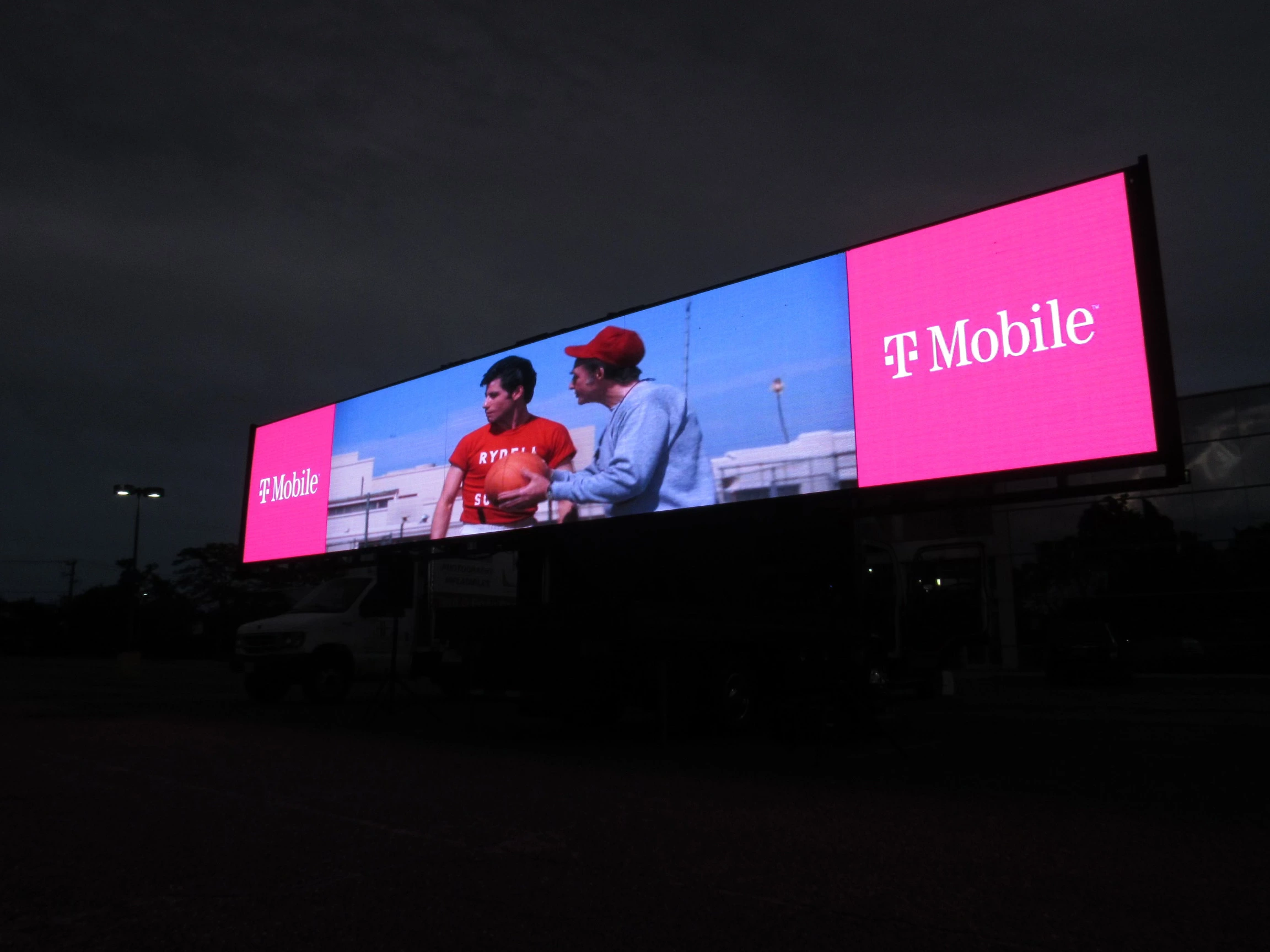
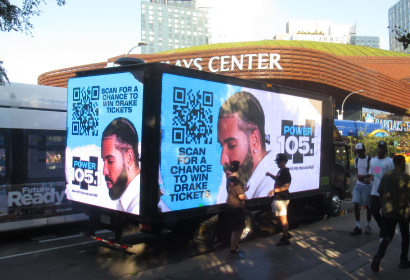
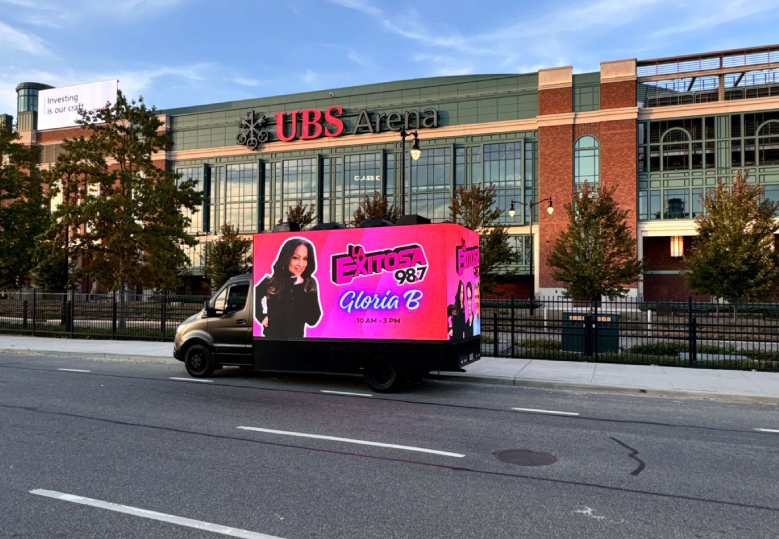
Think of these as billboards that come to you — or rather, to wherever your audience already is. Mobile LED trucks roll through the streets of Times Square (and beyond) with large, bright digital displays broadcasting your video or static ad to everyone they pass.
They're an especially smart move if you're working with a tighter budget but still want that Times Square feel. A well-designed ad on a moving truck often gets more attention than a static placement on a crowded screen, because it breaks people's visual routine.
Vendors like LED in Motion operate these trucks across Manhattan. You can typically book them for as little as a few hours, or run them across multiple days for a sustained push. Routes can be customized around events, rush hours, or specific neighborhoods.
| Duration | Estimated Cost |
|---|---|
| 4-hour campaign | ~$500–$1,500 |
| Full day | $1,000–$5,000 |
| Multi-day campaign | Negotiated with vendor |
LED trucks are a great fit for product launches, pop-up event announcements, or any campaign that benefits from geographic flexibility. They're also easier to book quickly than a fixed billboard.
Street Teams & Experiential Marketing
There's something that a screen can never fully do: look someone in the eye. That's where street team marketing comes in — and in a place as dense and curious as Times Square, it can work incredibly well.
The idea is simple. You send a real, human team into the space with branded gear, samples, flyers, or demonstrations. They create moments people can touch, taste, experience, and — critically — photograph and share.
Some things that work particularly well in Times Square:
- Handing out samples or discount cards with something memorable attached
- Live product demos that stop foot traffic (think: something unexpected, something people haven't seen before)
- Branded photo moments — a prop, a backdrop, anything that gives people a reason to take a selfie
- Mini performances or spectacles tied to your brand story
⚠️ Permit Note
New York City takes its public space seriously. If your activation involves props, stages, sound equipment, or distributing food and beverages, you'll likely need a permit from the NYC Street Activity Permit Office (SAPO). Contact them early — permit timelines can stretch weeks. If you're working with a local event agency, they'll typically handle this for you.
Public Stunts & Flash Mobs
If you want to stop people cold in one of the busiest places on earth, surprise is your most powerful tool. A well-executed public stunt or flash mob in Times Square can earn more media attention than any paid placement — and it costs a fraction of a premium billboard.
The best stunts share a few things in common: they're unexpected, they involve real people (not just screens), and they give onlookers a story they want to tell. Think: a flash mob that suddenly reveals a brand message. An enormous, interactive installation. An influencer event that starts looking like a spontaneous gathering.
What makes these particularly powerful is that they're essentially built for social media. The people watching become participants — and they share it. Every clip posted is free media.
✅ Make It Work
Hire a professional film team. The stunt itself is just one part. The content you capture from it — for social, press, ads — is where the long-term value lives.
Get your permits squared away first. Crowds, performances, and large props all require prior approval from NYC. Don't skip this step, or the whole thing could get shut down before it starts.
Partner with local media or influencers. Plant the seed before the event, and amplify it immediately after. Timing matters.
QR Code Campaigns & Augmented Reality
The phone in every visitor's pocket is your most direct line to engagement — and QR codes have made it easier than ever to bridge the gap between a physical ad and a digital experience. Place a scannable code on a billboard, a flyer, an LED truck, or a street activation prop, and you can instantly send someone to anywhere you want them to go.
The destinations people love most: an exclusive discount, a behind-the-scenes video, a social challenge, or an augmented reality experience (like a product try-on filter or a 3D brand animation). These feel like rewards for paying attention, which is exactly the psychological frame you want.
- Make your QR code large enough to scan from at least 6–8 feet away — tiny codes get ignored
- The landing page needs to load in under 2 seconds on mobile; if it doesn't, you've already lost them
- Add a clear CTA like "Scan for a surprise" or "Try it in AR" — curiosity drives taps
- Track your scans obsessively; this is one of the most measurable forms of OOH advertising
Times Square Webcams: The Underrated Bonus
Here's something most advertisers don't think about: Times Square is live-streamed 24 hours a day to millions of people worldwide through platforms like EarthCam. That means if your billboard or street activation falls within a webcam's field of view, you're essentially running a global digital campaign at no extra cost.
Webcam feeds are popular with travel enthusiasts, people who miss NYC, and anyone who wants to feel the energy of the city from wherever they happen to be. It's a surprisingly large audience.
The practical implications:
- Choose billboard placements in high-webcam-traffic zones — Duffy Square, the Red Stairs, and Nasdaq Corner are the most streamed areas
- Schedule premium placements during peak viewing periods: New Year's Eve, major holidays, and weekend evenings
- Design creative that reads clearly even at reduced video resolution — bold, high-contrast visuals over intricate detail
Some brands have also gone a step further by sponsoring specific webcam feeds or partnering with creators who livestream from Times Square regularly. If your campaign is already running there, it's worth exploring.
How to Actually Launch Your Campaign
Once you've decided this is worth doing, here's how to move from idea to execution without losing your mind along the way.
Define What Success Looks Like
Brand awareness? A product launch spike? Social media buzz? Your goal shapes every decision that follows — don't skip this step.
Choose Your Medium (or Mix)
Match your budget and goals to the right option. A startup doing a product launch might do an LED truck + street team. An established brand might go straight for a digital billboard.
Design for the Environment
Times Square is chaotic, bright, and loud. Your creative needs to cut through. Keep copy short, contrast high, and emotion front and center.
Sort Your Permits Early
If you're doing anything beyond a straight billboard buy, contact the NYC Street Activity Permit Office well in advance. Delays here can derail your entire timeline.
Book Through the Right Vendors
Contact Clear Channel Outdoor, Outfront Media, or Branded Cities directly for billboard inventory. For smaller or faster buys, platforms like Blip or Shoutable work well.
Extend the Campaign Online
Don't let the spend stop at the screen. Film it. Share behind-the-scenes content. Create a hashtag. Make the Times Square moment the start of a broader conversation.
Measure Everything You Can
QR codes, custom URLs, and hashtag tracking give you real data. Use them. Even awareness-only campaigns should have some proxy metric you're watching.
Yes, You Can Advertise in Times Square on a Budget
This might be the most important section in this entire guide — because the assumption that Times Square is only for deep-pocketed corporations is simply wrong.
Here's what actually works at smaller budget levels:
Shared Screen Slots — Starting at $150
Many digital billboard companies sell rotation slots where your 15–30 second ad cycles alongside other brands throughout the day. You get real screen time in the heart of Times Square for a few hundred dollars. Not prime time, not a solo takeover — but genuine exposure that you can film, share, and build a story around.
Off-Peak and Last-Minute Buys
Vendors regularly discount unsold screen time. If you're flexible on timing and can move fast, you can sometimes secure mid-sized screen placements at 30–50% off standard rates. These are perfect for flash sales or opportunistic campaigns.
LED Trucks for Short Bursts
A four-hour LED truck campaign near Times Square can run under $2,000 and gives you far more engagement than most digital ad formats of the same price. The visuals travel with your audience instead of waiting for them to walk by.
🔑 Where to Look
Check out platforms like Shoutable, Blip, and TSX Broadway — they specialize in connecting smaller brands with Times Square inventory quickly and without agency markups. The inventory is real, the process is straightforward, and you don't need a media buyer on retainer to get started.
The bottom line: what makes a Times Square campaign memorable isn't always how much you spend. It's how creative you are with what you've got.
Frequently Asked Questions
How much does it cost to advertise on a Times Square billboard?
It genuinely varies. Shared rotation slots start around $150 for 15 seconds. Full-day mid-range placements run $5,000–$50,000. Premium spots like the Nasdaq Tower or One Times Square can reach $100,000–$500,000+ per month. Most brands land somewhere in between.
What's the cheapest legitimate way to advertise in Times Square?
Shared digital billboard slots — available through platforms like Shoutable or Blip — are the most affordable entry point, starting around $150 for a 15-second spot in rotation. Mobile LED trucks are a close second at roughly $1,000/day for a full campaign.
How do I actually book a Times Square ad?
You can go directly to media owners like Clear Channel Outdoor, Outfront Media, or Branded Cities for traditional billboard inventory. For smaller or faster purchases, digital platforms like Blip or TSX Live handle bookings with far less friction. Agencies are also an option if you want someone managing the full campaign.
Do I need a permit to advertise in Times Square?
For billboards and LED truck ads, no — the vendors handle any required permissions. But if your campaign involves live events, street performances, large props, or public stunts, you'll need approval from the NYC Street Activity Permit Office (SAPO) and potentially the NYPD. Start that process early.
Can my ad include video? What about audio?
Yes to video — most digital billboards fully support motion and animation, which is strongly encouraged. Audio, however, is not permitted due to city noise regulations. Design your creative to be compelling without sound, which is good practice for any out-of-home advertising anyway.
Is Times Square advertising worth it for small businesses?
It depends on your goals. If you're looking for pure conversion-driving ROI, there are more efficient channels. But if you want a brand credibility moment, a viral-worthy campaign asset, or a genuine milestone for your business — yes, even a modest Times Square placement can be worth it when you use the content strategically across social media.
When is the best time to run a Times Square campaign?
Peak traffic periods — New Year's Eve, major holidays, weekends, and large Manhattan events — give you maximum visibility but also come with higher costs. If your budget is limited, weekday afternoons offer strong foot traffic at more accessible price points.