
Times Square advertising carries a certain mythology. Every brand that's ever run a campaign there has leaned into the story: the massive screen, the sea of people, the sense that you've arrived. And there's truth to that. A spot in Times Square does something to a brand's perceived status that's hard to replicate anywhere else.
But here's the part that doesn't make it into the press release: most brands that book a Times Square billboard are paying for a moment — a fixed spot on a fixed screen in one fixed location. The people who see it are the people who happen to walk past it. Everyone else misses it entirely.
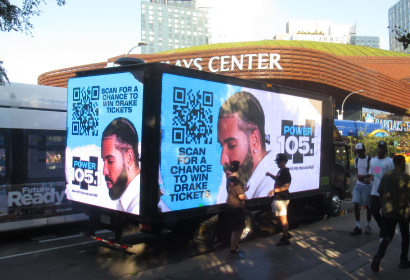
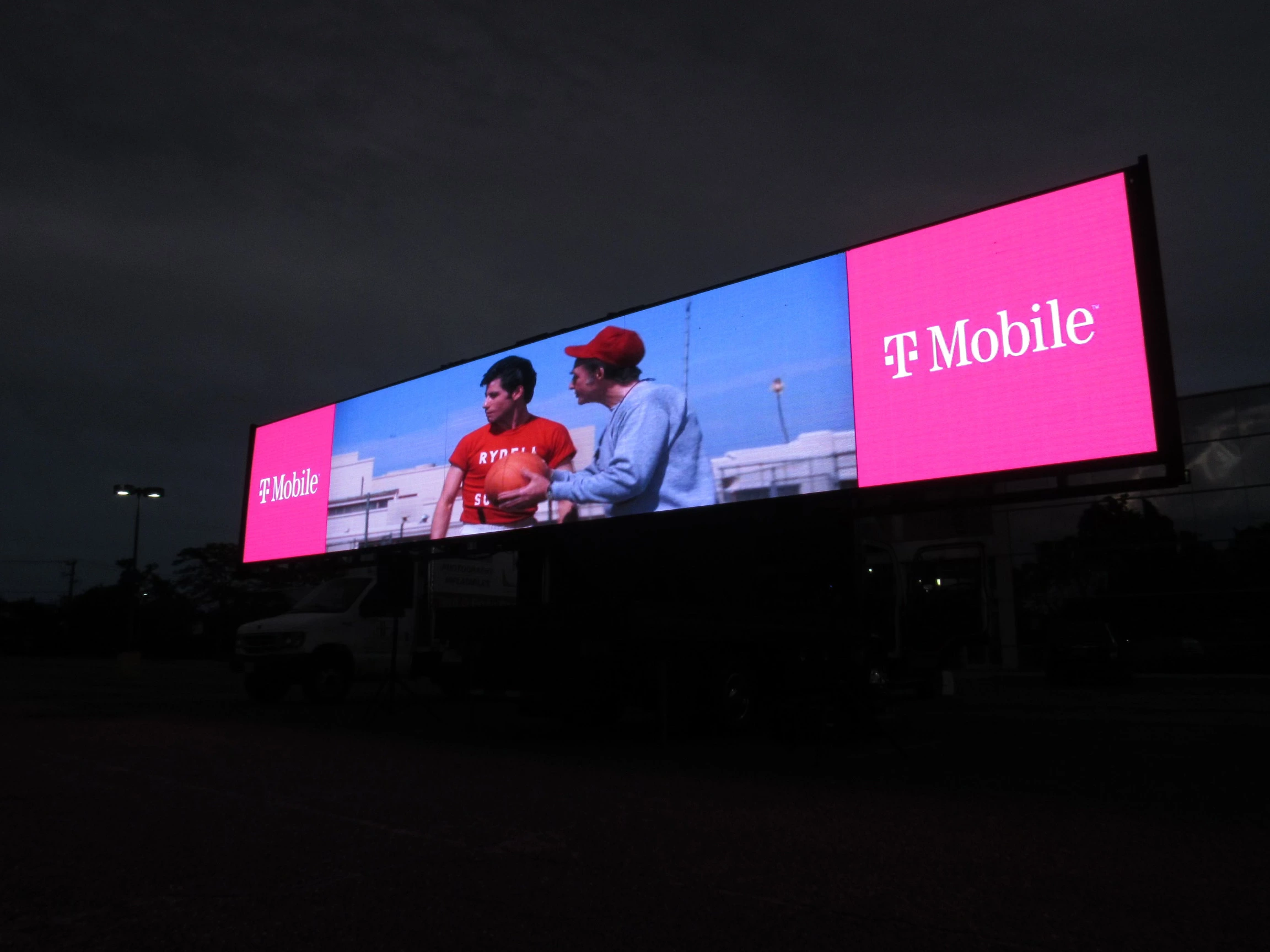
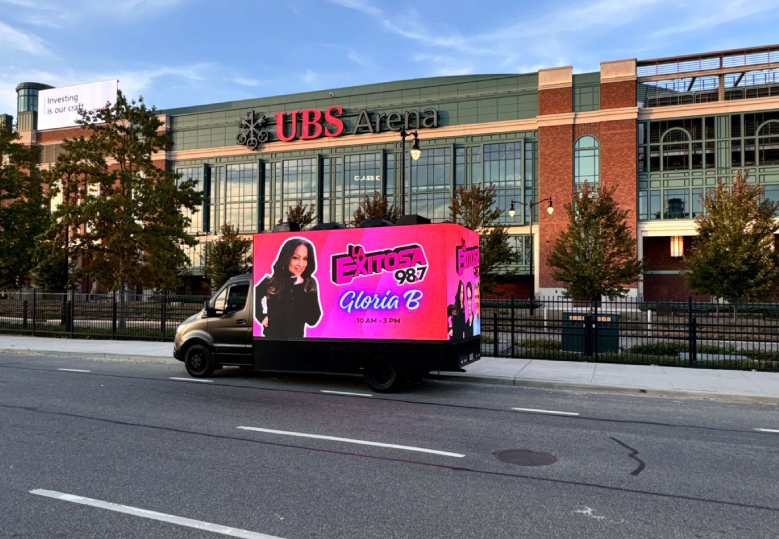
Mobile LED truck advertising works differently. Your message moves through the city, finds your audience wherever they actually are, and delivers the same visual impact at a fraction of the price. For most brands — especially those who aren't household names yet — it's simply the smarter buy.
This isn't a knock on Times Square. It's an honest look at what each option actually delivers, and when one genuinely outperforms the other.
The Times Square Problem Nobody Talks About
Times Square draws around 330,000 visitors a day. That sounds enormous — and it is. But look at who those people actually are. A large portion are tourists experiencing New York for the first or second time in their lives, looking up at the lights, photographing everything. They're not commuters. They're not necessarily your target customer. And when they leave Times Square, they may never see your ad again.
Now consider what you're paying to reach them. Mid-range billboard placements start at $5,000 per day. Premium spots on the Nasdaq Tower or One Times Square run well into six figures per month. Your 15-second clip rotates with dozens of other brands throughout the day. You don't control when exactly your ad runs. You can't adjust routes based on where a crowd is gathering. And if your campaign underperforms creatively, there's no flexibility to change course — you've already paid for the screen.
None of this makes Times Square advertising bad. It makes it high-cost, low-flexibility, and best suited for brands with very specific goals — usually pure brand prestige or a one-time viral moment. For everything else, there's a better way.
"The question isn't whether Times Square is impressive. It's whether impressive is what your campaign actually needs."
LED in Motion NYCHead-to-Head: LED Trucks vs. Times Square Billboards
Here's a direct comparison across the metrics that actually matter when you're planning a campaign budget:
| Times Square Billboard | LED Truck (LED in Motion) | |
|---|---|---|
| Entry Cost | $5,000–$50,000/day | From ~$1,000/day |
| Geographic Reach | One fixed location | All five boroughs |
| Audience Targeting | Whoever walks past | Custom routes by neighborhood, event, or demographic |
| Campaign Flexibility | Fixed — hard to change once booked | Highly flexible — routes and timing adjustable |
| Permit Requirements | Managed by vendor | Minimal — vendor handles compliance |
| Lead Time to Launch | Weeks to months | Often days or less |
| Audience Type | Heavy tourist concentration | Locals, commuters, event crowds — your call |
| Video Support | Yes | Yes — full HD motion |
| Audio | Not permitted by city | Not recommended in most areas |
| Best For | Brand prestige, viral moments, major launches | Most campaigns, any budget, targeted reach |
6 Reasons LED Trucks Win for Most Brands
Dramatically Lower Cost, Same Visual Impact
A full-day LED truck campaign runs a fraction of what a single Times Square billboard slot costs — without any sacrifice in display quality. The screens are bright, high-definition, and impossible to ignore. You're not getting a lesser experience; you're getting a smarter spend.
Your Message Goes Where Your Audience Actually Is
A fixed billboard only works if the right person walks past it. An LED truck goes to them. Whether that's a neighborhood with high concentrations of your demographic, a venue hosting an event your customers attend, or a competitor's flagship location — you're in control of where the campaign lands.
Real Audience Targeting (Not Just Foot Traffic)
Times Square's foot traffic is enormous but broad. With a mobile campaign, you can route trucks through specific zip codes, neighborhoods, or event corridors to reach the people most likely to care about your brand. That's the kind of precision that out-of-home advertising rarely offers.
Fast to Launch — Sometimes Within Days
Booking a premium Times Square screen can involve weeks of lead time, creative approvals, and contractual commitments. An LED truck campaign can often be planned, designed, and deployed within days. For time-sensitive launches, events, or pop-up activations, that speed is invaluable.
Flexibility to Adjust Mid-Campaign
If your route isn't performing, change it. If an event has moved, redirect the truck. This level of in-flight flexibility simply doesn't exist with a fixed screen — once you've booked those pixels, they're locked in. Mobile campaigns let you respond to real-world conditions as they unfold.
Built-in Content for Social Media
There's something visually interesting about a massive, bright LED truck moving through city streets. People photograph and film them. Pair your truck campaign with a street team or influencer presence, and the content essentially creates itself — extending your reach far beyond the people who physically saw the truck.
When LED Trucks Make the Most Sense
LED trucks aren't a one-size-fits-all solution — but they fit more situations than most brands realize. Here are the scenarios where they consistently outperform fixed billboard alternatives:
Product Launches
Drive trucks through neighborhoods where your target customer lives, works, or shops. A new sneaker launch hitting the streets of SoHo and Williamsburg simultaneously is more targeted than any Times Square spot.
Event Amplification
Running a concert, festival, pop-up, or conference? Route trucks through surrounding areas to pull foot traffic toward your venue and keep your brand in view of attendees all day.
Competitive Conquesting
Park or route near a competitor's flagship store, event, or sales location. It's one of out-of-home advertising's most effective — and underused — tactics.
Local Business Promotion
Restaurants, gyms, real estate agencies, and retail stores can run hyper-local campaigns focused on a specific radius — something a Times Square billboard can never offer.
Political & Advocacy Campaigns
Target specific voting districts, rally locations, or community centers with precise messaging. Reach the people whose opinions you're trying to move, not just whoever happens to be in Midtown.
Flash Sales & Time-Sensitive Offers
Need to move inventory fast? LED trucks can be deployed with hours of notice to create urgency at exactly the right moment — something you simply can't do with pre-booked screen time.
What LED Truck Advertising Actually Costs
One of the most common questions we get: "What does this actually cost?" Here's a realistic breakdown, because vague pricing helps no one plan a campaign budget.
| What's Included | Estimated Cost | |
|---|---|---|
| Half-Day Campaign (4–5 hrs) | Single truck, custom route, 1 borough | $500–$1,500 |
| Full-Day Campaign (8–10 hrs) | Single truck, multi-borough routing | $1,000–$5,000 |
| Multi-Day Campaign | Sustained presence, adjusted daily routes | Negotiated rate |
| Event-Specific Deployment | Targeted to event venue and surrounding area | Varies by duration |
💡 What Affects Your Price
Truck size: Larger trucks with bigger displays cost more but deliver proportionally more visibility.
Route complexity: Simple single-borough routes are more affordable; multi-borough or event-specific routing may increase cost.
Time of year: Peak event seasons (summer, holiday season, major NYC events) see higher demand and tighter availability.
Campaign duration: Multi-day bookings almost always come with better daily rates than single-day buys.
How to Run an LED Truck Campaign That Actually Works
Booking a truck is the easy part. Getting real results takes a bit of thought on the creative and strategy side. Here's what separates campaigns that get talked about from campaigns that just drive around:
- Design for motion and distance. Your ad will be seen by people who are walking, driving, or glancing from the sidewalk. High contrast, bold typography, and a clear single message beat anything intricate or text-heavy.
- Match your route to your audience, not your ego. It's tempting to want the truck near Times Square for the Instagram content. But if your actual customer lives in Astoria or Williamsburg, that's where your truck should spend its time.
- Pair it with a street team. An LED truck draws eyes. A street team standing nearby converts that attention into an interaction. The combination is far more effective than either alone.
- Film everything professionally. The footage of your truck in the city is a campaign asset that keeps working long after the truck has returned. Use it for social, ads, pitch decks, and press materials.
- Timing matters more than you think. Rush hour, lunch breaks, and post-work evenings all have different foot traffic patterns. Plan your route schedule around when your target audience is actually on the streets.
- Include a clear call to action. Whether it's a QR code, a short URL, or just a memorable brand phrase — give people something to do with the attention you've just captured.
When Using Both Actually Makes Sense
To be clear: this isn't an argument that Times Square advertising is worthless. For certain goals — a major brand milestone, a campaign designed specifically to go viral, or a prestige moment for an investor deck — it earns its price tag.
The most effective campaigns often use both. A brand might book a premium screen in Times Square for a 48-hour window to generate the headline moment, then extend the campaign's geographic reach for the following two weeks using LED trucks across all five boroughs. The billboard provides the credibility anchor. The trucks do the actual audience work.
📋 A Simple Rule of Thumb
If your primary goal is prestige or a viral moment — Times Square makes sense and the premium may be justified.
If your primary goal is reach, targeting, conversions, or sustained awareness — LED trucks will almost always deliver more value per dollar spent.
If you have the budget to do both and clear goals for each — that combination is hard to beat.
Frequently Asked Questions
How much does LED truck advertising cost in NYC?
Campaigns typically start around $500–$1,500 for a half-day and $1,000–$5,000 for a full day. Multi-day campaigns are usually negotiated at a better daily rate. Pricing depends on truck size, route complexity, and timing.
Are LED trucks actually more effective than Times Square billboards?
For most campaign goals — reach, targeting, cost efficiency, and flexibility — yes. Times Square billboards win on prestige and the viral potential of that specific setting. But for brands that need their message in front of a specific audience, in multiple locations, without a six-figure budget, LED trucks consistently outperform.
Where do your LED trucks operate in New York City?
Throughout all five boroughs — Manhattan, Brooklyn, Queens, the Bronx, and Staten Island. Routes are fully customizable based on your target audience, event locations, or neighborhood priorities.
Do I need a permit for an LED truck campaign?
For a standard moving LED truck campaign, no permit is typically required from you — vehicle compliance is handled by the vendor. If you want the truck to remain stationary at a specific location for an extended period, local regulations may apply and we'll advise accordingly.
How quickly can a campaign launch?
In many cases, within a few days of final creative approval. For very last-minute campaigns, reach out directly and we'll let you know what's available. This is one of the key advantages over fixed billboard inventory, which often requires weeks of lead time.
Can I use video on the LED trucks?
Yes — full-motion HD video is fully supported and strongly recommended. Movement on a moving truck creates a layered visual effect that static images can't match. Keep clips short (10–15 seconds, looping) and ensure the message lands even without audio.
What kinds of brands use LED truck advertising?
Across the spectrum: consumer product brands running launch campaigns, local businesses driving neighborhood awareness, entertainment companies promoting events, political campaigns reaching specific districts, real estate firms building presence in target areas, and startups that need brand exposure without enterprise budgets. If your audience is somewhere in New York City, a truck can reach them.